
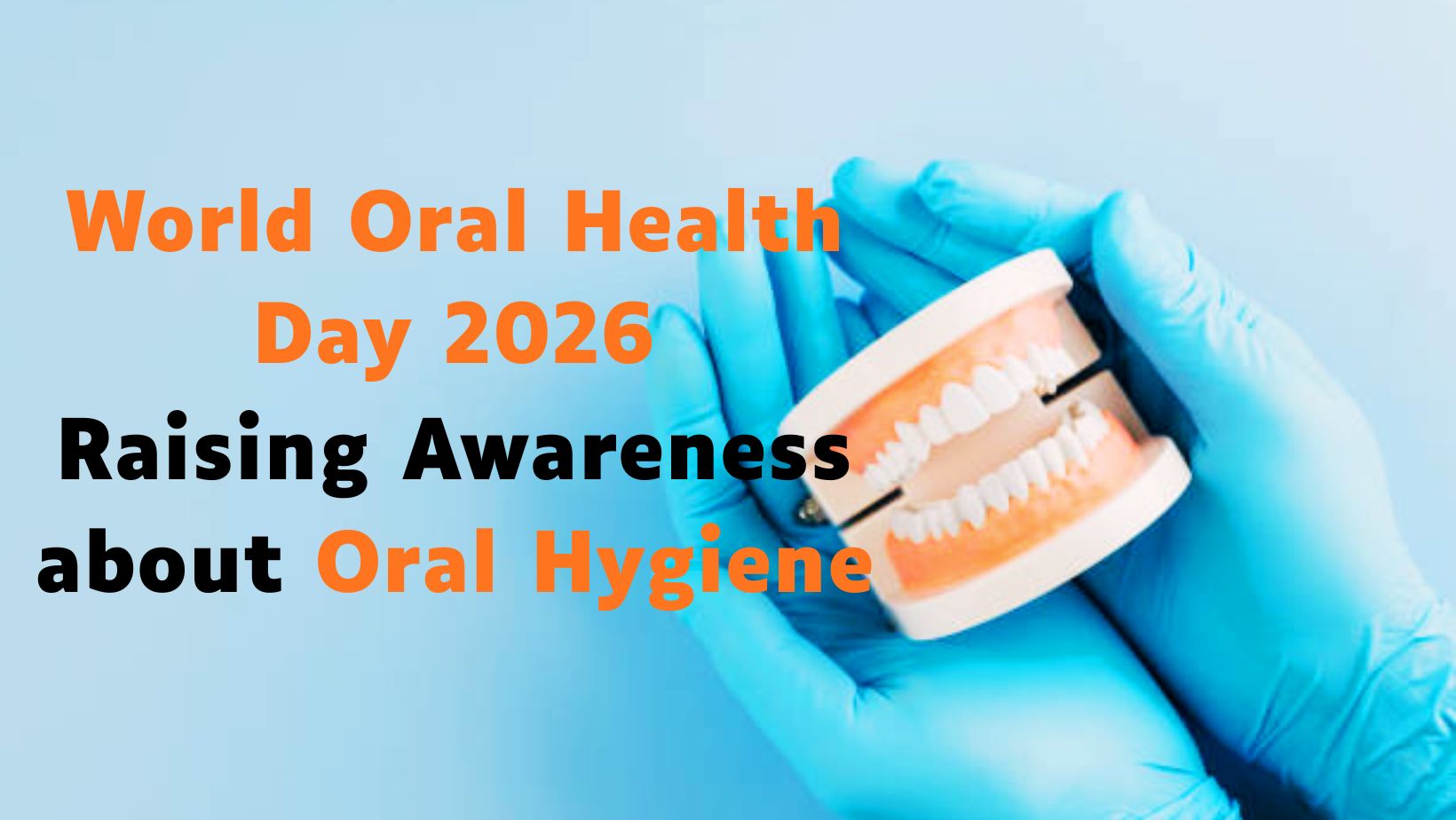
What Is World Oral Health Day?
World Oral Health Day lands on March 20 every year. It is organized by the FDI World Dental Federation — the same body that sets global standards for dental practice. The goal is straightforward: get more people to take their mouth seriously.
Most health campaigns focus on heart disease, cancer, or diabetes. Teeth get treated like a cosmetic issue. That is a mistake. World Oral Health Day exists to correct that assumption, and it does so by pushing governments, health systems, and individuals to treat dental care as basic healthcare — not a luxury.
The event has grown considerably since its launch. Dental associations, hospitals, community health workers, and clinics across more than 100 countries now run screenings, workshops, and free check-up drives every March 20.
The 2026 Theme: “A Happy Mouth is a Happy Life”
The theme for world oral health day 2026 is “A Happy Mouth is a Happy Life.”
It is a simple phrase, but it points to something people often underestimate. A healthy mouth lets you eat without pain, speak without embarrassment, and smile without hiding your teeth. When that breaks down, the consequences are not just physical. Chronic dental pain affects sleep, concentration, and mood. Missing teeth change how people interact socially. Gum disease has been linked to anxiety and depression in several studies.
The 2026 theme pushes back against the idea that oral health is vanity. It is a function. And when it fails, it affects quality of life in ways that are hard to reverse.
Why March 20? The Number Behind the Date
The date is not random. It was chosen to reflect two specific oral health benchmarks:
- Children should have 20 baby teeth by the time their primary dentition is complete.
- Adults should retain at least 20 natural teeth at the end of their life to eat comfortably without dentures.
Twenty teeth, on the twentieth. It is a neat way to make the numbers mean something — and it gives patients a concrete target to work toward rather than a vague instruction to “take care of their teeth.”
The Scale of the Problem: 3.5 Billion People
Here is the number that puts everything in context: nearly 3.5 billion people worldwide currently suffer from some form of oral disease. That is close to half the global population.
Untreated tooth decay is the single most common health condition on the planet. Not seasonal flu. Not back pain. Tooth decay.
Why does it stay untreated? A few reasons:
- Dental care is expensive and rarely covered by basic health insurance
- Access to dentists is limited in low- and middle-income countries
- People do not seek treatment until pain forces them to
- There is still a cultural tendency to accept tooth loss as normal aging
This is not a developing-world problem alone. Across high-income countries, millions of adults have not seen a dentist in years — often because of cost, anxiety, or simply not prioritizing it.
World oral day campaigns try to move the needle on all of these barriers at once.
The Mouth-Body Connection (What Most People Ignore)
Your mouth is not a closed system. Bacteria from gum infections do not stay in your gums. They enter the bloodstream. This is well-documented and has real consequences.
Poor oral hygiene is associated with:
- Heart disease — Oral bacteria have been found in arterial plaque. People with severe gum disease have a measurably higher risk of heart attack and stroke.
- Type 2 diabetes — The relationship runs both ways. Diabetes makes gum disease worse. Gum disease makes blood sugar harder to control.
- Respiratory infections — Bacteria from the mouth can be inhaled into the lungs, raising the risk of pneumonia, especially in older adults.
- Pregnancy complications — Gum disease is associated with preterm birth and low birth weight. Hormonal changes during pregnancy also make gums more vulnerable to infection.
- Cognitive decline — Emerging research links chronic periodontal infection to a higher risk of dementia, though causality is still being studied.
None of this means bad teeth cause all of these conditions directly. But the associations are consistent enough that your dentist is not exaggerating when they say oral health affects your whole body. It does.
Common Oral Diseases and How to Prevent Them
Tooth Decay (Dental Caries)
The most common oral disease globally. Caused by acid-producing bacteria feeding on sugar in your mouth. Starts silently — no pain at first — and progresses into cavities, root infections, and eventually tooth loss if left alone.
Prevention: Brush twice daily with fluoride toothpaste. Reduce sugar intake, especially sticky and acidic foods. Get regular check-ups so decay is caught early.
Gum Disease (Periodontal Disease)
Begins as gingivitis — red, swollen, bleeding gums. If not treated, it progresses to periodontitis, where bone and tissue around the teeth start to break down. This is irreversible. You can stop it from getting worse, but you cannot regrow what is lost.
Prevention: Floss daily. It is not optional. Brushing alone does not clean between teeth. Professional cleaning every 6–12 months removes hardened tartar that brushing cannot touch.
Oral Cancer
Affects the lips, tongue, cheeks, floor of the mouth, hard palate, and throat. Often painless in early stages, which is why it gets missed. Risk factors include tobacco use, alcohol, HPV, and prolonged sun exposure on the lips.
Prevention: Avoid tobacco in any form. Limit alcohol. Ask your dentist to do an oral cancer screening — it takes two minutes and can catch abnormal tissue before it becomes serious.
Tooth Sensitivity
Not technically a disease, but it affects millions of people and often signals an underlying problem — enamel erosion, receding gums, or cracks in teeth.
Prevention: Use a soft-bristled brush. Do not brush aggressively. Avoid highly acidic drinks regularly. If sensitivity is new or worsening, see a dentist.
Daily Habits That Actually Make a Difference
Most dental problems are preventable. Not complicated to prevent — just consistently neglected.
Brush properly, twice a day. Two minutes each time. Angle the brush at 45 degrees to the gumline, not just the tooth surface. Electric toothbrushes tend to do a better job than manual ones for most people.
Floss every day. Yes, every day. Around 35% of tooth surfaces cannot be reached by a toothbrush. That is where cavities form between teeth, and where early gum disease starts.
Watch the sugar, especially the timing. It is not just how much sugar you consume — it is how often your teeth are exposed to it. Sipping a sugary drink slowly over two hours does more damage than drinking it in ten minutes. Each sugar exposure triggers an acid attack that lasts about 20–30 minutes.
Drink water. Tap water in many areas contains fluoride. It washes away food debris and helps neutralize acid. Dry mouth — caused by certain medications, mouth breathing, or dehydration — dramatically accelerates decay.
See a dentist regularly. Twice a year for most people, annually at a minimum. Not when something hurts. Waiting until there is pain usually means the problem is already advanced.
Who Is at Extra Risk?
Certain groups face higher oral health risks and deserve specific attention on World Oral Health Day:
Children: Early childhood caries (baby bottle tooth decay) is one of the most common preventable diseases in young children. Habits formed early stick. Teaching kids to brush and limiting sugary drinks before age two makes a measurable difference.
Pregnant women: Hormonal changes during pregnancy increase gum inflammation. Untreated gum disease is linked to complications. Dental care during pregnancy is safe and recommended.
Older adults: Dry mouth from medications, receding gums, and difficulty with manual dexterity make older adults more vulnerable to decay and gum disease. Many also have older dental work that needs monitoring.
People with diabetes: Blood sugar control and gum health are directly linked. Anyone managing diabetes should see a dentist more frequently, not less.
Tobacco and alcohol users: Both significantly raise the risk of gum disease, tooth loss, and oral cancer. Combining them multiplies the risk.
What You Can Do on This Day
World oral health day is not just for dental professionals. There are practical ways anyone can participate:
- Schedule the appointment you have been putting off. If it has been more than a year, book it today.
- Talk to your kids about brushing. Make it a habit, not a fight. Let them pick their toothbrush.
- Share accurate information. A lot of dental misinformation circulates online — from oil pulling curing gum disease to charcoal whitening being safe. Fact-check before you share.
- Support access to dental care. Volunteer with community health initiatives. Donate to organizations that provide dental care in underserved areas.
- Audit your own habits honestly. When did you last floss? When did you last see a dentist? World Oral Health Day is a useful prompt for a real self-assessment.
How Citrus Valley Dental Supports Oral Health Year-Round
Citrus Valley Dental treats World Oral Health Day as a reminder, not an annual event. Good dental care is not seasonal — it is built on consistent habits and regular professional support.
The team at Citrus Valley Dental focuses on preventive care first. Catching decay early means a simple filling instead of a root canal. Catching gum disease early means a cleaning and better home care, not surgery. The goal is to keep patients out of the chair for anything major — because the best dental treatment is the one you never need.
If you have not had a check-up recently, oral health day is as good a reason as any to change that. A single appointment can identify problems you did not know existed and give you a clear picture of what your mouth actually needs.
Reach out to Citrus Valley Dental to schedule your next visit. Your future self will notice the difference.
The Bottom Line
World Oral Health Day is not about guilt or fear. It is about making the case — once a year, loudly — that teeth matter. That gums matter. That the mouth is connected to everything else in the body, and ignoring it has real costs.
The 2026 theme gets it right. A happy mouth genuinely does lead to a happier life. Not because of appearances. Because you can eat without pain, sleep without infection, and go through your day without your teeth demanding attention.
That is worth twenty minutes a week and one dental appointment a year. Most people spend more time maintaining their cars.
Take care of your mouth on World Oral Day — and every other day of the year. Contact Citrus Valley Dental to book your check-up today.